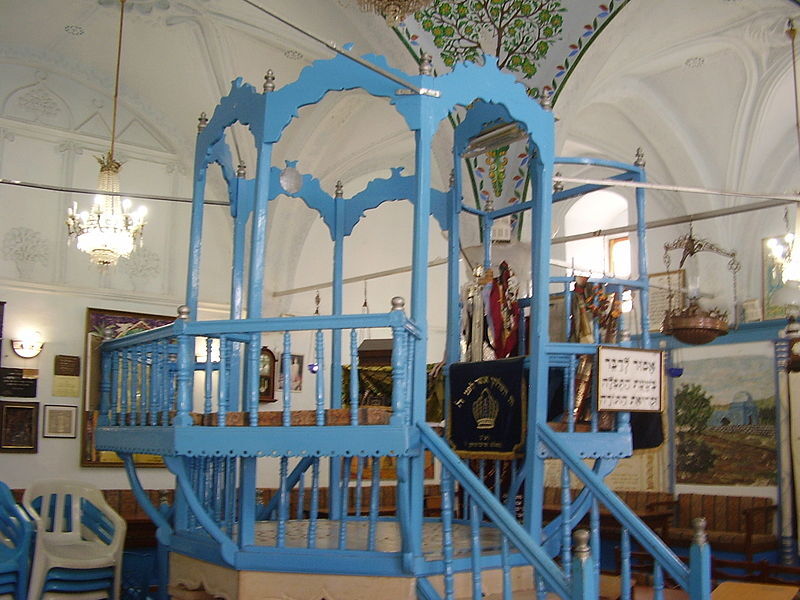
The Mahar"i Abuhav Synagogue in Safed is located in the heart of the old city of Safed. It was founded in the 16th century and is traditionally named after our Rabbi Yitzhak Abuhav, the author of the book Menorah HaMaor. Rabbi Yitzhak Abuhav is a preacher and one of the sages of Sephardim, who lived in the early 15th century and wrote the famous book "Menorah HaMaor".
When the Jews were expelled from Spain in 1492, it was clear to some that the holy Torah scroll written by Rabbi Yitzhak Abuhab could not be left behind. A group of deportees carried the Torah scroll all the way to Safed, and upon arriving, they found the synagogue known today as the Abuhab Synagogue to be the most suitable place to house the unique and holy book. On the south wall, facing Jerusalem, are three sacred arks. In the right ark is the Torah scroll in question, which was traditionally written by Rabbi Yitzhak Abuhab.
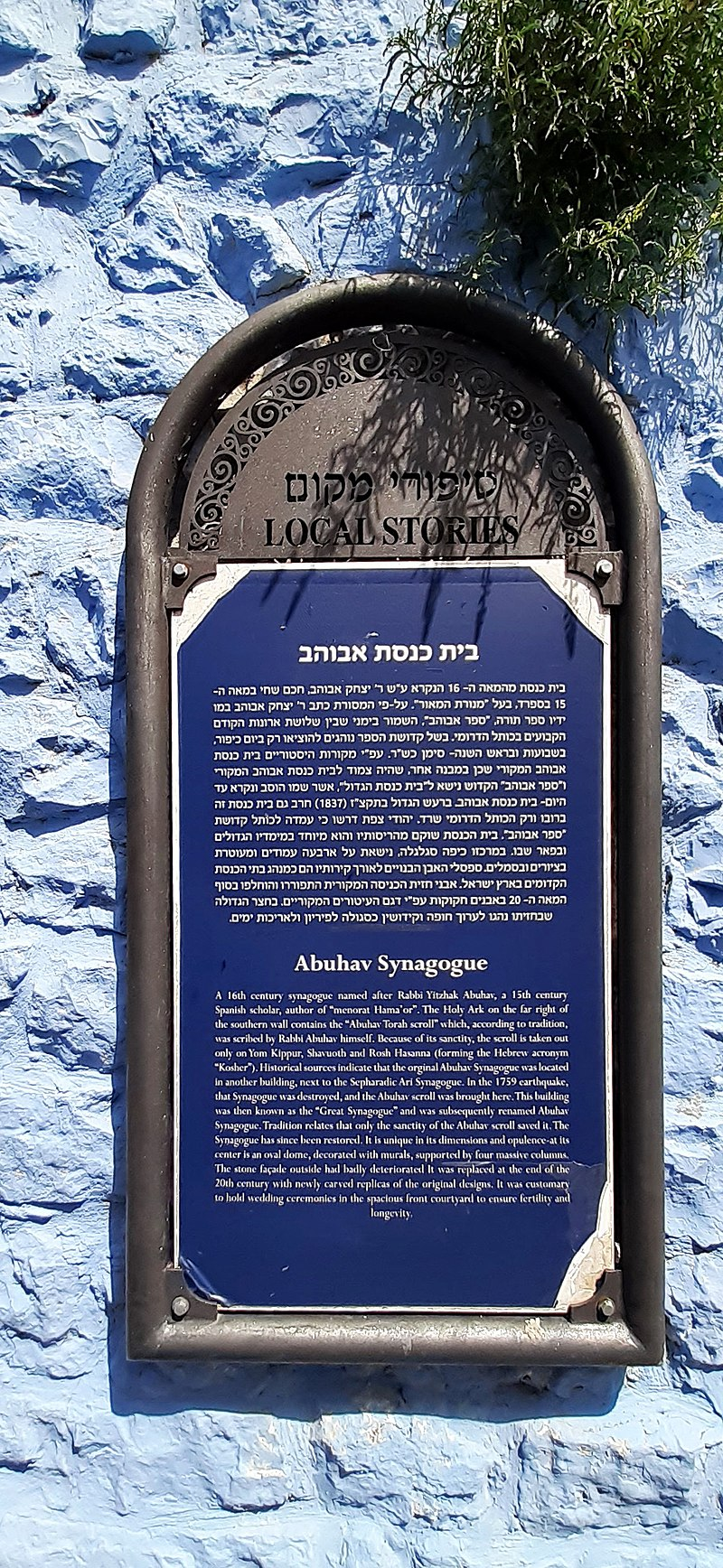
It is possible that Rabbi Yaakov Berav was the one who brought to Safed the Torah scroll attributed to Rabbi Yitzhak Abuhab, a scroll that gives the synagogue a special importance. This Torah scroll is considered the oldest of the Torah scrolls found in Safed, and many traditions and legends have grown around it. It is said that Rabbi Yitzhak Abuhab immersed his body in the mikveh of purification 26 times each time before writing the name of God in the Torah scroll (the gematria of the name of God is 26). The scroll is kept in the Holy Ark all year round and is only read three times a year: on Yom Kippur, Shavuot, and Rosh Hashanah [the initials of Ksher].
Another Torah scroll found in the Abuhav synagogue is the one by Rabbi Suleiman Ohana, a rabbi and kabbalist from Pes, Morocco, who immigrated to Safed and connected with the disciples of the Ari. These Torah scrolls gave the synagogue greater importance, and therefore, for generations, the Jews of Safed would gather there and celebrate the night of Shavuot - the night of the giving of the Torah - with great rejoicing. It was customary for the synagogue to hold wedding ceremonies on Fridays. After the mincha prayer, with the participation of the groom and a large crowd, the bride would be led in a procession led by klezmer players, followed by members of the community who would dance and sing.
In the Safed earthquake that occurred in 1837, the synagogue was destroyed, and only the southern wall remained intact; the Jews of the city attributed this to the sanctity of the "Book of Abuhav."
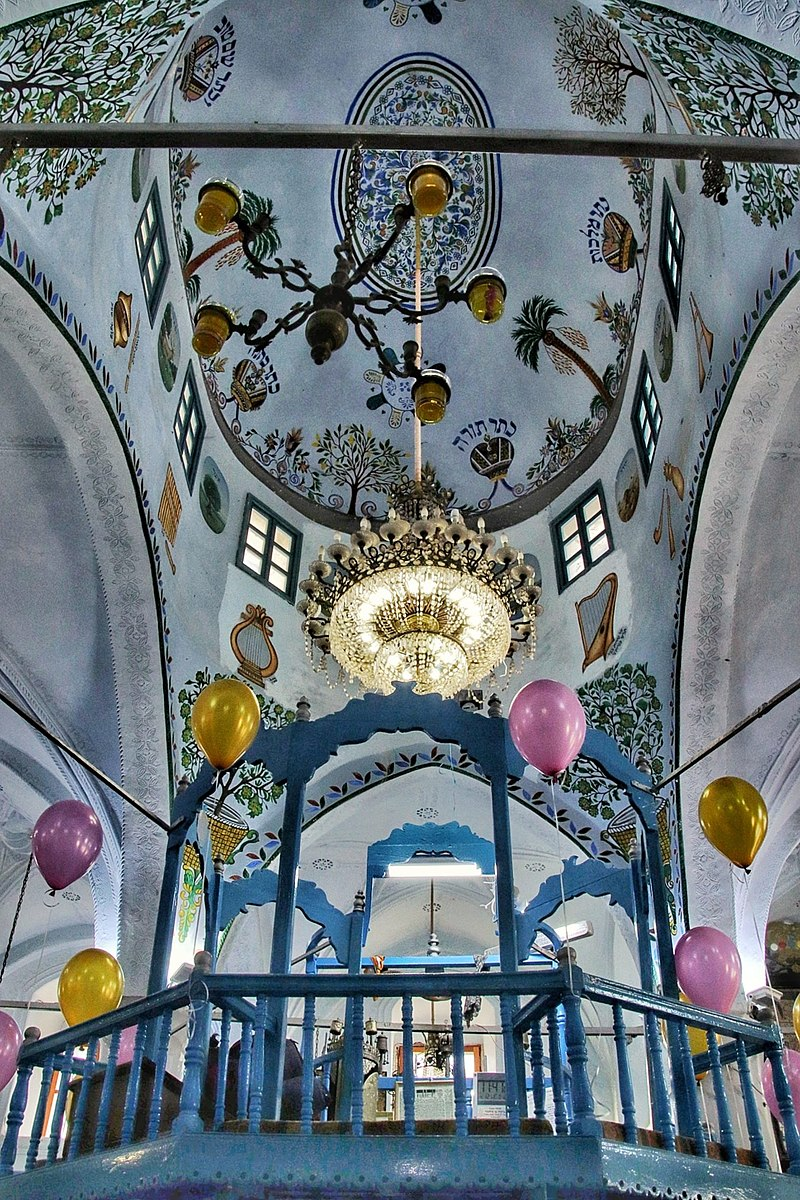
The synagogue